How a boy band created a culture for a generation of young women
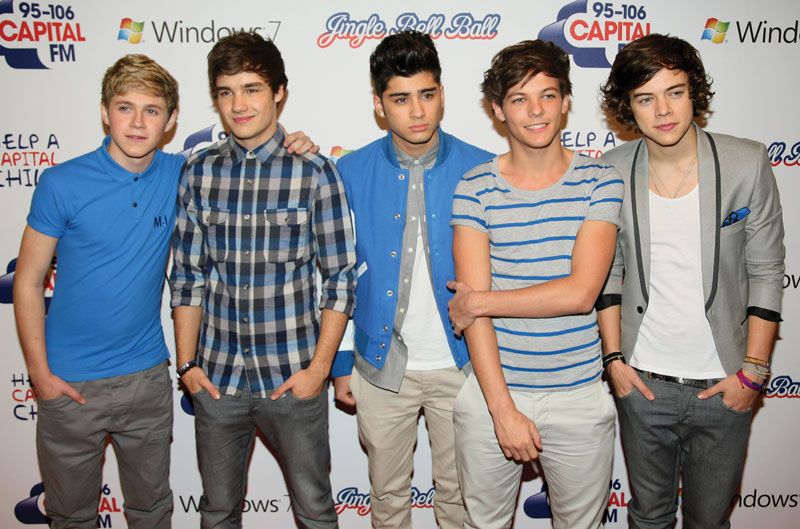
I know you know this song, we all know this song. What about the names Harry, Niall, Liam, Louis, and Zayn? While one or two may sound familiar, I think a person who has never heard the name One Direction is very hard to come by. From 2010 to 2016 the band was constantly at the center of international music culture- with five chart topping studio albums, sold out international stadium tours, hit singles, viral music videos, a documentary movie, and countless red carpet appearances. While their music was and still is highly beloved and critically acclaimed, I think their most lasting legacy is their fans. One Direction was an unstoppable force in bringing girls, teenagers, and young women together. My personal interest in researching and developing this in depth analysis of the band comes from my experience of being one of those girls. I have a vivid memory of being in the car with my mom listening to Radio Disney and hearing “What Makes You Beautiful” for the first time. As a nine-year-old with a predisposition to hyper-fixate on things, I was immediately hooked. Their debut album, Up All Night became the soundtrack of my life for that year. I played it in my room before school, in the car on the way to dance class, at sleepovers with my friends, and even got my seventy year old grandma to listen to it. While my own personal narrative may be the motivation for this project, I do want to present a truly well researched and scholarly portrayal of what this band created culturally. Tumblr fan pages were without a doubt an integral piece of this phenomenon, however this is not one of them. We all know the impact that music can have on the shape and structure of both individual and collective cultural identities. Using that lens, I intend to further understand how One Direction became a microcosm of the collective identity of Gen Z women in the early 2010s.
Creating a culture…
We are what we listen to
When we ask what culture really is, there is an obvious list of parts that create it- beliefs, religion, history, fashion, art, media, and music. While this is by no means an all-encompassing list, music has always stuck out to me as a certain driving force of what our society looks and sounds like. Simply put, what we listen to becomes who we are. Through the passage of time, the sheer amount of choices we have when it comes to decide what bands, singers, and artists we want to listen to have multiplied over and over again. However, there have always been artists that come to the forefront- the names everyone knows, the songs that get played on the radio, the sold out international stadium tours.
Analyzing these occurrences through the uses and gratifications theory is helpful. This theory is quite a simple one actually, that consumers utilize media as a tool to meet their specific personal needs and desires. Perhaps someone listens to Sarah McLachlan’s “I Will Remember You” because they need to cry. Someone else puts on Jimmy Buffet’s “Margaritaville” because they are ready for a fun day at the beach. In Jack Lule’s Understanding Media and Culture, he states, “Many people use the Internet to seek out entertainment, to find information, to communicate with like-minded individuals, or to pursue self-expression. Each of these uses gratifies a particular need, and the needs determine the way in which media is used.” While he is speaking about the internet, the same is true of music (which in our age works in tandem with the internet).
And let me tell you, no one needs a community of like-minded individuals or a way to express themselves more than a teenage girl. Growing up and adolescence can be the scariest time of your life. Puberty, social discovery, and trying to create an identity for yourself is incredibly daunting. Teenagers are looking for something to cling to- something they can come together and decide, we all love this one thing; to be a part of a group, to say “I am this,” or “I am that.” That’s where One Direction comes in… maybe being a “Directioner” was a self identifier we needed to move through the process of becoming fully fledged, well rounded young women.
We’ve always been fangirls
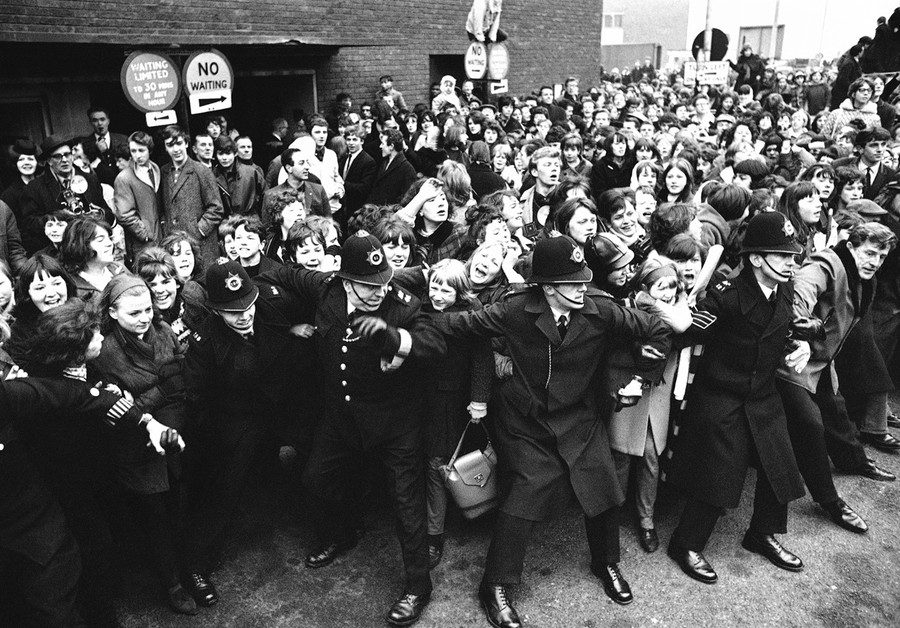
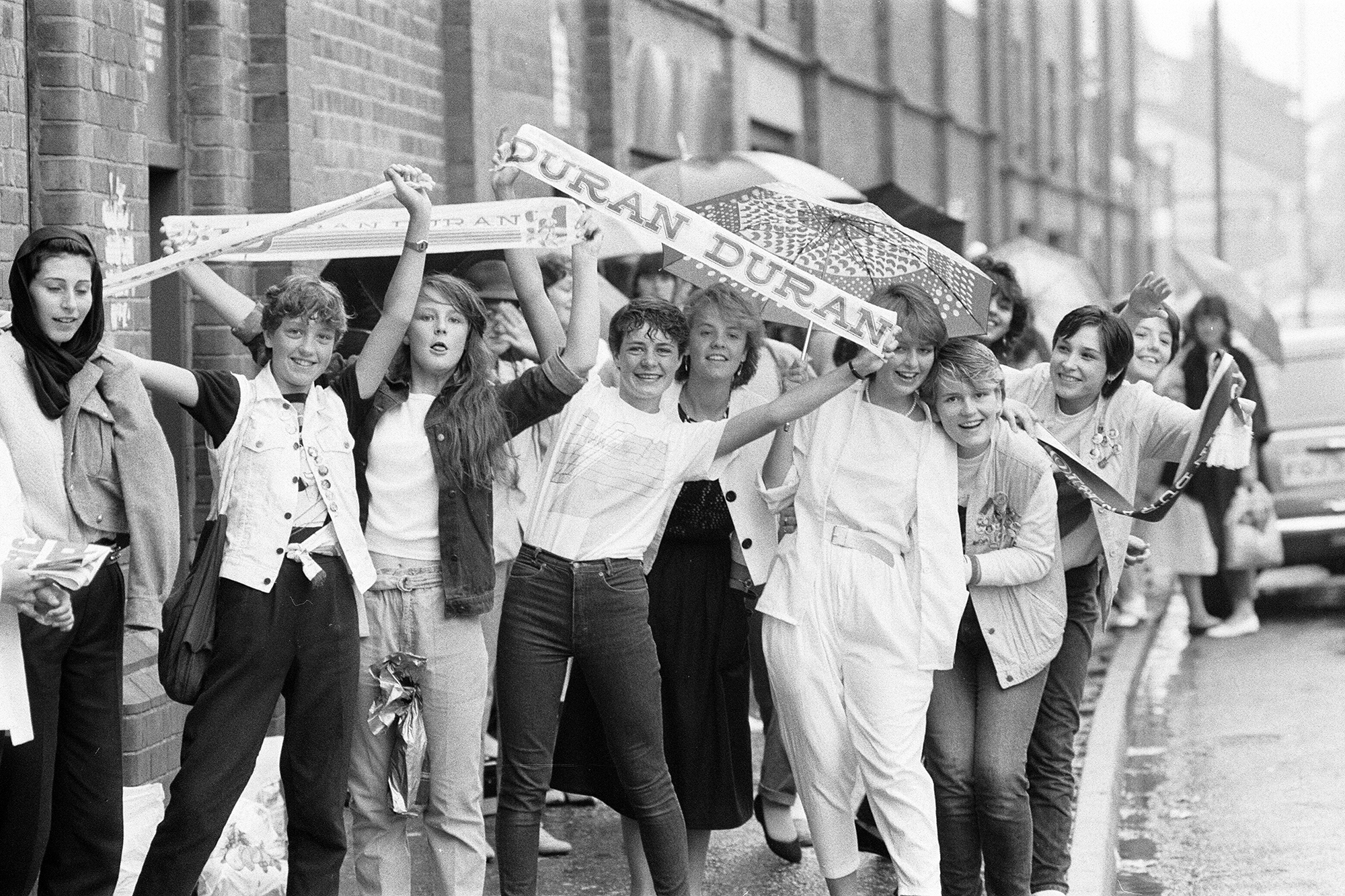
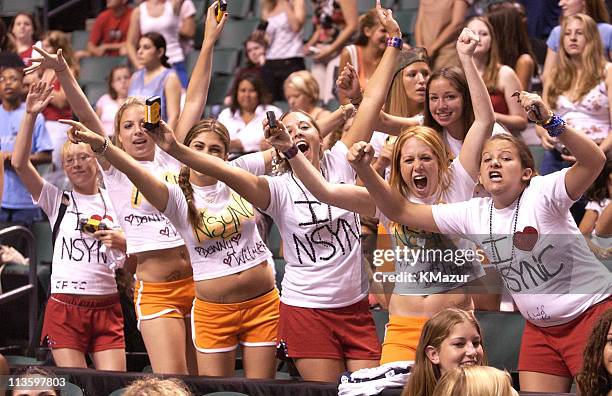
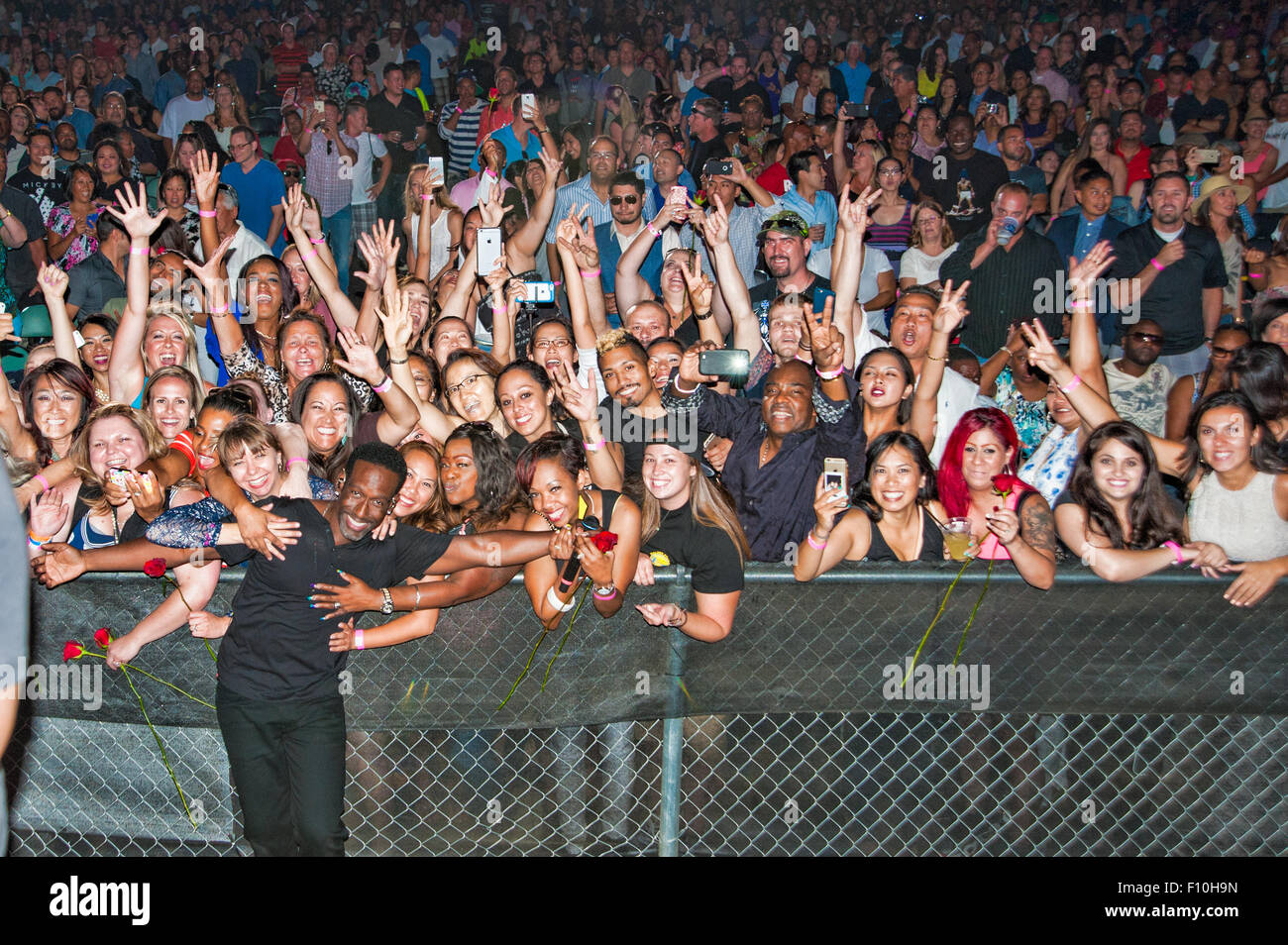
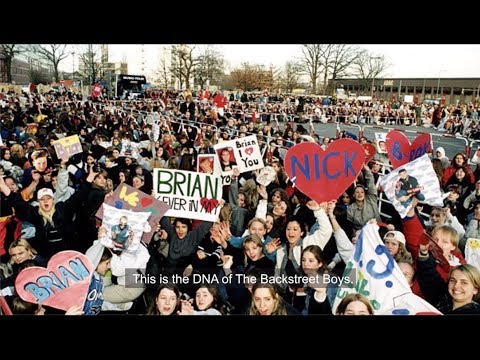
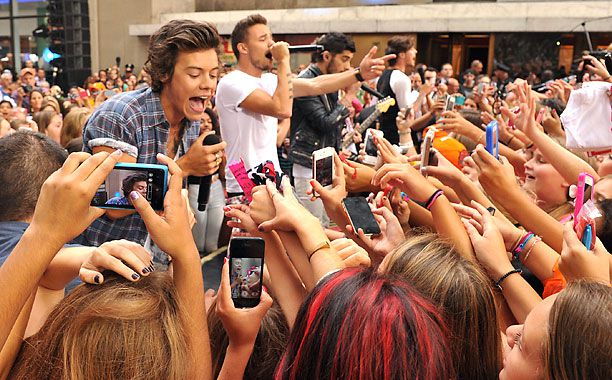
What do all these women have in common? A shared all-consuming kind of love, adoration, infatuation, enthusiasm, and obsession with their favorite band. An utterly unique sense of “fandom.” While the absolute sensation that One Direction came to be was internationally enormous, they were certainly not the first to do it.
We can trace this phenomenon back to one of the most culturally pervasive musical groups of all time, The Beatles. In the 1960s, their fans were so intensely obsessed, they warranted the coining of a new cultural moniker- Beatlemania. “The characteristics of Beatlemania were described as screaming, hysterical, involuntary behavior, and it was exhibited primarily by adolescent girls. Similar reactions had been produced before by single entertainers and singers, but the Beatles were among the few groups of contemporary entertainers to achieve this effect.” (Taylor 81). The Beatles and their early albums, specifically Please Please Me (1963), With The Beatles (1963), and A Hard Day’s Night (1964) set the tone for a certain kind of international awareness in female fans. Songs like “Love Me Do,” “I Want To Be Your Man,” and “Can’t Buy Me Love,” allowed these women to project all their deeply held romantic fantasies onto John, Paul, Ringo, and George. This kind of sensation became almost generationally cyclical, with two specific commonalities- musical groups consisting of between four to six “heartthrob” type men, usually in their twenties; and hoards of passionately fanatic young girls and women ranging from their early teens to twenties. A perfect formula for the celebration of the “boyband.”
In the eighties, we moved into the MTV era. The rise of popularity of the music video allowed teen girls even more access to their favorite groups, and the ability to watch these music videos religiously, over and over again. Another English boyband, Duran Duran enveloped teens into the New Romantic movement, using androgynous fashion and bold, innovative visualization in their music videos. Their hits, “Hungry Like The Wolf,” “Girls on Film,” and “Rio,” were staples of eighties teen culture. George Micheal and Andrew Ridgeley’s duo: Wham! garnered equally devoted fandom. Their vibe was more carefree, enthusiastic, and unabashedly silly, with chart topping songs “Wake Me Up Before You Go-Go,” and “Last Christmas,” (which is consistently one of the most streamed songs every holiday season).
The nineties were what many consider to be the “peak boyband era.” Teens in this time were obsessed with band like NSYNC and Backstreet Boys. These groups were hyper-produced- with tight vocal harmonies, well choreographed dance routines, matching outfits, and an unassuming boy-next-door kind of charm. In this era we also saw stars who got their start in these boybands, most notably Justin Timberlake, go on to incredibly successful solo careers- carrying their existing fanbase into fandom of their individual music. This is a trend we continually see today, especially Harry Styles’ astronomical success, post One Direction.
How did we get here?
Seeing five complete unknowns thrown together into a band that would become so iconic is part of the reason their fanbase became so dedicated so quickly. In 2010, Harry, Liam, Louis, Niall, and Zayn all auditioned for the popular UK television music competition, X Factor. While all of their auditions displayed talent and potential, it quickly became clear that none of the boys would move forward as individual artists in the competition. Not wanting the promise he saw in each of them to slip away, the famed and often notoriously rude judge and music executive, Simon Cowell decided to put them together as a group.
And thus, One Direction was born. The shock, awe, and utter elation on the boys faces in the video is what viewers of the show and girls everywhere immediately began to fall in love with.
“We got something brilliant here and we gotta look after these guys, because they could be huge.” -Simon Cowell
Cowell was obviously right in saying this. Under his mentorship, the band ultimately placed third in the competition, but that in no way stopped them from becoming huge. The participatory nature of the show, in which fans could vote for their favorite acts each week, created what “Directioners” would become. Girls everywhere who watched the show devotedly and participated in the voting process felt that they played a part in the band’s success. This kind of attachment inspires a more fervent and loyal kind of fandom than fans who simply listen to a group’s music frequently.
Only four months after the conclusion of X Factor, One Direction released their debut album, Up All Night. It debuted at #1 in both the UK and US, making the group the first British boyband to do so in The United States.
What is a “fandom?”
Physical media
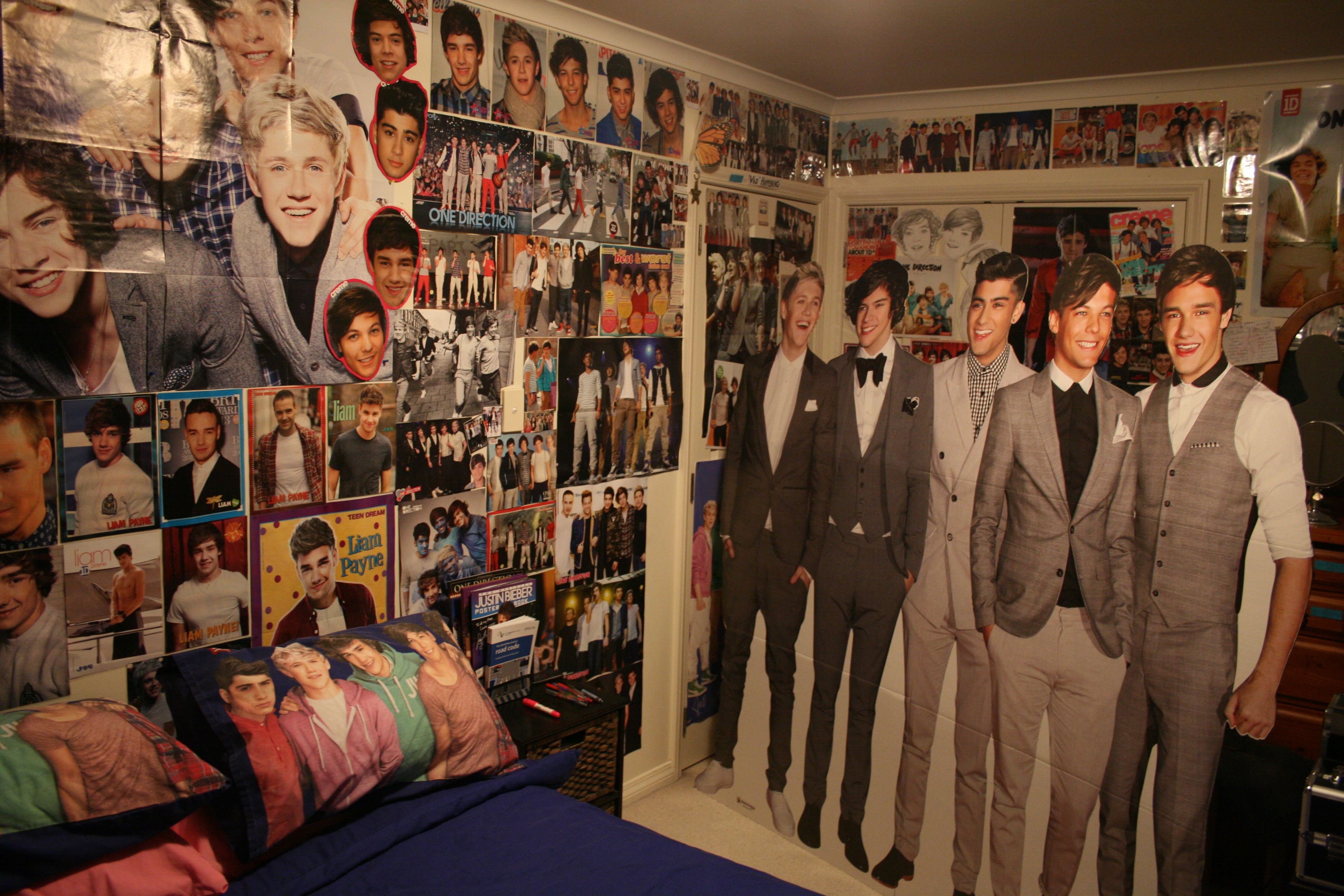
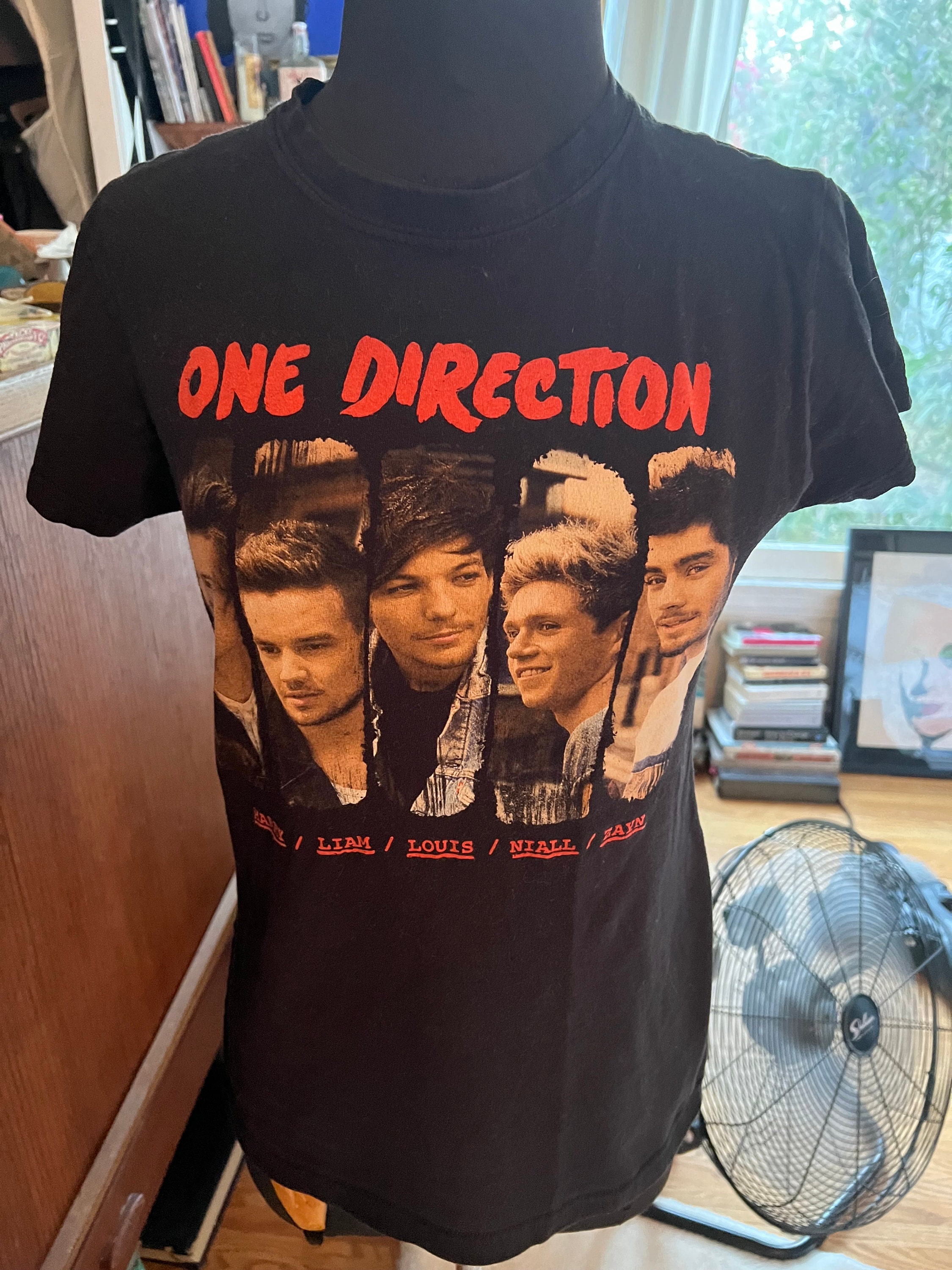
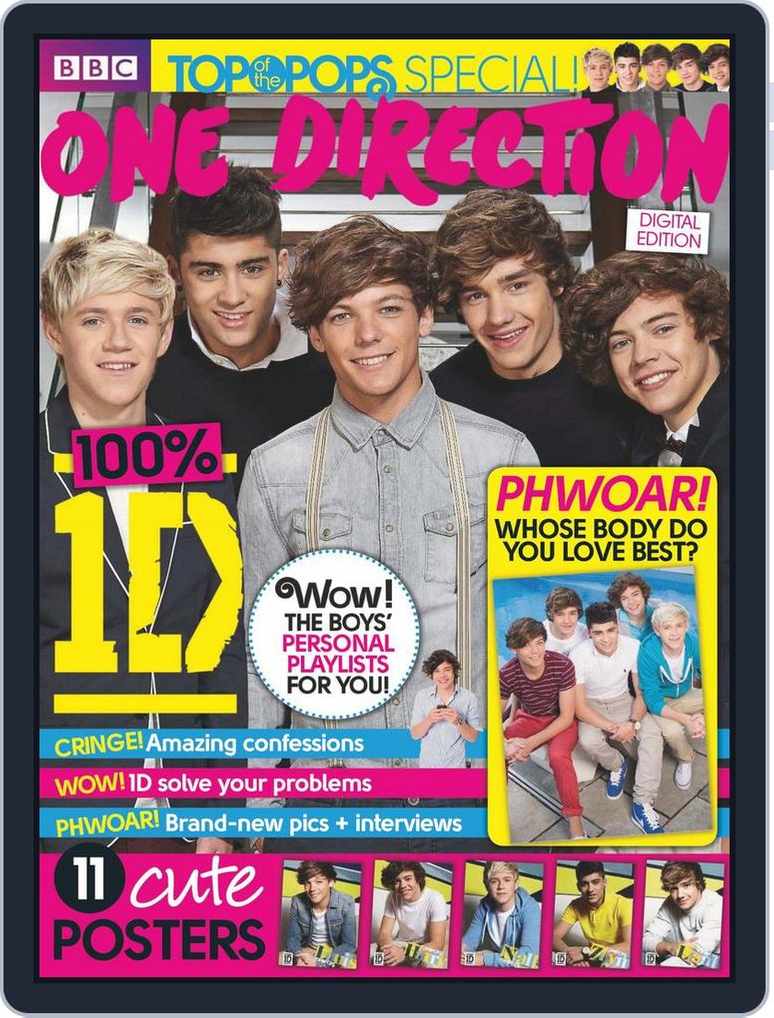
When analyzing the “fan culture” that One Direction cultivated there are two main distinctions. One aspect would be the more physical and in person kind of idolization of the band- think attending concerts, physical CDs, T-shirts, 17 Magazine posters, even life-size cardboard cutouts of the boys (and yes, my Harry Styles one lived in my bedroom for quite a few years). These are aspects of fandom that have been around for decades. I mean who hasn’t hung up a poster of their favorite band at some point in their life? The popularity of this memorabilia contributed to the commercial success of the band, as well as creating identifiers for Directioners to bond over. You could see a girl your age on the street wearing a One Direction T-shirt and know that the two of you had at least one thing in common. Some incredibly zealous Directioner teens took it so far that their bedrooms almost became shrines to the boys.
Online fandom
The second, and possibly longer lasting kind of fandom One Direction created was online. Internet culture in the early 2010s was blossoming, however it was very different from the social media landscape we know today. In the post-digital age we live in, we are constantly flooded with an over-saturation of media. For example, if your TikTok algorithm knows that you are a fan of Niall Horan, your For You Page will consistently show you videos of his concerts.
In the early 2010s, internet subcultures required greater effort in seeking out. Platforms like Tumblr and Reddit were more popular; and Instagram was brand new, and much more rudimentary than we know it to be today. One Direction fan content thrived and flourished in these spaces. Directioner Tumblr blogs were among the most popular, and served as a means for teenage girls to find online communities of connection and relate to others over their love for the band. They shared fan art, memes, news updates, discussion forums, and an overwhelming amount of fan fiction.
Fan fiction was one one of the most significant pieces of these online communities. Fanfic has a long history of fans taking characters, settings, and plots from existing literature, movies, and TV and writing their own stories about them. Online, there are a plethora of these narratives covering many different franchises including: Harry Potter, Twilight, Star Wars, Game of Thrones, and Doctor Who. However, there is also plenty of fan fiction on platforms like Wattpad where fans use members of bands as the characters for their stories, One Direction being the most popular. In Francesca Coppa’s book, The Fanfiction Reader: Folktales for the Digital Age she states,
“One could argue that every girl to some degree invents fanfiction for herself: alone in her bedroom she wonders, ‘what if’ and changes the story in her head. She may even write it down. But it’s when she begins to share her work and read and write with other fans that her stories become fanfiction per se, and begin to be shaped to community norms and expectations. Fans often experience the finding a community as a kind of homecoming, ‘I didn’t know other people did this too’” (8).
Her argument underscores the reason why this medium became so popular with fans, every teenage girl romanticizes and imagines what it would be like to date Harry Styles. That shared notion creates a community of young women where they can flesh out their struggles of feeling unseen, overlooked by boys their age, or even sexually frustrated. The stories vary from sweet, romantic tales where the fans insert themselves as a character in a relationship with one of the band members to overtly sexually narratives (a popular trope actually becoming “my mom sold me to One Direction”). Some of these fan fictions even developed into actual published novels like Anna Todd’s After series and The Idea of You by Robin O’Riley- both of which are now feature films. I would be remiss not to note the popularity of the controversial “Larry Stylinson” fan fiction as well. There are thousands of online fanfics in which fans imagine/theorize band members Louis Tomlinson and Harry Styles in a secret gay romantic relationship. Both men have never publicly self identified as queer or LGBTQ and have denied these allegations, having been asked about it in interviews multiple times over the years. These incidents show us that online fandom isn’t always positive and become destructive at times. Fans can create their own ideas of who celebrities are that can become hurtful- as they are, after all, real people.
Today, the online fandom of One Direction still persists. I am constantly served “fan edit” videos like the one above regularly on YouTube and TikTok. The fact that the online community that the fans of this group created still exist nine years after they last performed together is a testament to both its reach and power. These kinds of video, as well as compilations of funny moments of the boys, serve as intense pieces of nostalgia. The comments overflow with sentiments like, “I miss them so much,” “take me back,” and “I miss when One Direction was the most important thing in my life.” The quote, “we were girls together,” has been floating around TikTok a lot recently, and I feel that is a perfect way to describe the feeling one gets from watching these videos. As most One Direction fans who were most engaged when the band was at the height of their powers are now in our twenties- it reminds us of a less complicated time in our lives. We were all girls together- girls from all different backgrounds, upbringings, and even countries; unified by the guiding light that was this band. We can look back and remember how we giggled at slumber parties, sang their songs at the top of our lungs with reckless abandon, perhaps even were moved to tears at a concert. That specific sense of teenage girlhood is something you can never get back, and our love for One Direction represents something incredibly special about that. For many years, they truly were “The Story of Our Lives.”
Pick your fav
It’s no surprise that having a favorite member of the band was another trend within the One Direction fandom. This is a typical occurrence in almost any boy band. While many of us claimed “Directioner” as a piece of our identity, we wanted to further specify. Teenage girls are constantly unsure of who they want to be. In Musical Identities, MacDonald explains that, “research in this tradition portrays the adolescent as experiencing an identity crisis which involves the exploration of various possible identities this crisis subsequently is resolved through a commitment to a particular identity” (135). While a full-on identity crisis may not be solved by declaring that Louis is your favorite member of One Direction, it is still helpful. Every little detail you decide at that age allows you to create the person that you want to be. It can be as silly as, “my favorite color is pink,” or “sushi is my favorite food.” Deciding little things about yourself allows you to be more confident in deciding the big important things. At some point in your teenage years, you come to the realization that you don’t have to be the person your parents want you to be or who your friends want you to be. The epiphany that you can make all the decisions to create your own reality is profoundly life changing.
Each of the boys had such distinct personalities we could chose which one of them we related to most closely, or it could be which one of them was your “dream guy?” That is another thing that always brings girls together, talking about boys. Our teenage years are when we first start dating and learning about romantic relationships. Every girl has a unique and different idealization of what kind of guy they would want to be with. Harry was Prince Charming, Liam the mature and responsible one, Louis the class clown, Niall the adorable boy next door, and Zayn the mysterious bad boy. Teen girls tend to see things in black and white. The tropes of who these boys were seemed to perfectly align with the characters of a typical high school movie. (Which was no accident on the part of the band’s management) Taking TigerBeat magazine quizzes of “Which 1D boy is perfect for you?” brought us together, bonding us further in a time of so much uncertainty.
These specific devotions to our favorites has also been carried forward into their careers as solo musicians. We feel so dedicated and bonded to the boys that we make up a very large part of their solo followings.
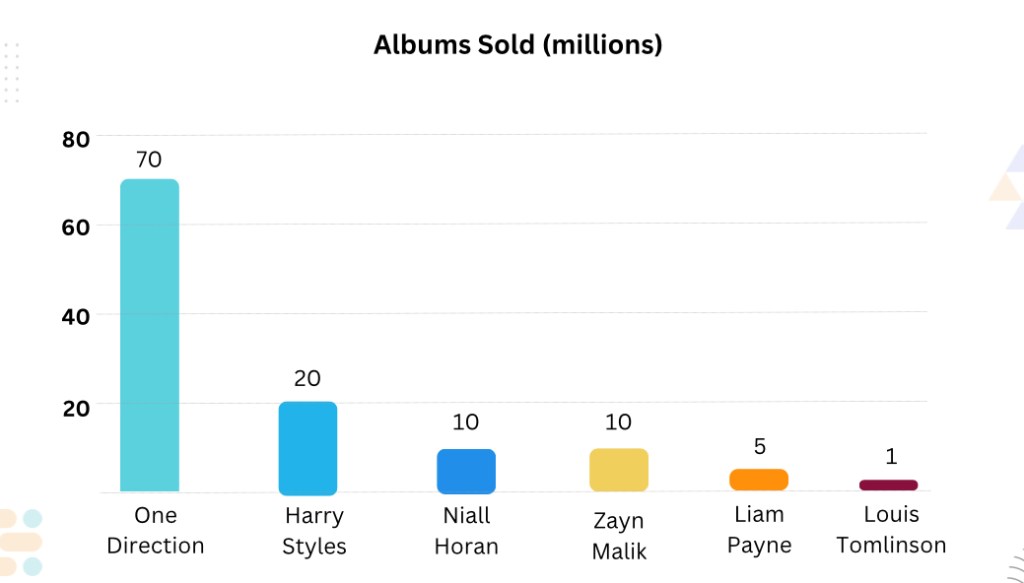
This graph compares album sales between the band as well as the five members. Harry has without a doubt become the most successful of the five, followed by Niall and Zayn. I do also think it is important to note that the album sales of the five of them combined does not even come close to their sales as a band. This is just another testament to the power that One Direction held for all of us.
My story
One direction has been a massive part of my life. They represent something more to me than any other band or musician. They are a symbol of a million different little things to me: the innocence of being a silly young teenager, something that brought me together with friends, understanding the power of music for the first time, something that brought me closer with my own mom (and continues to, thanks to Niall), and plenty of the sappy and romantic notions I still hold close to this day. The fact that at twenty-two years old, I still sing at the top of my lungs like a crazy person to these songs is a true testament to the place One Direction holds in my heart.

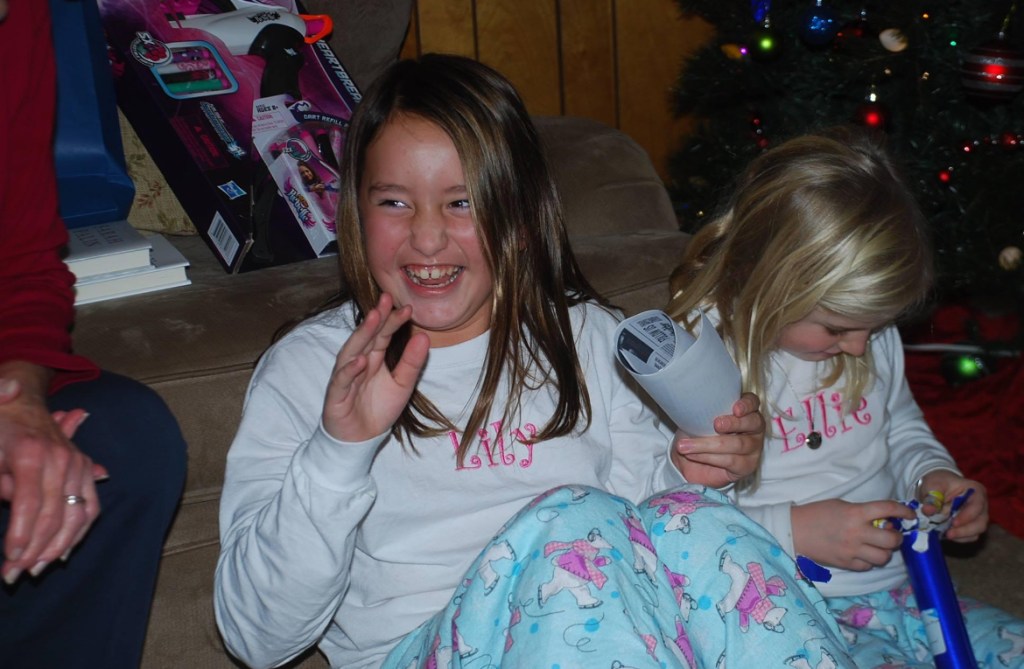
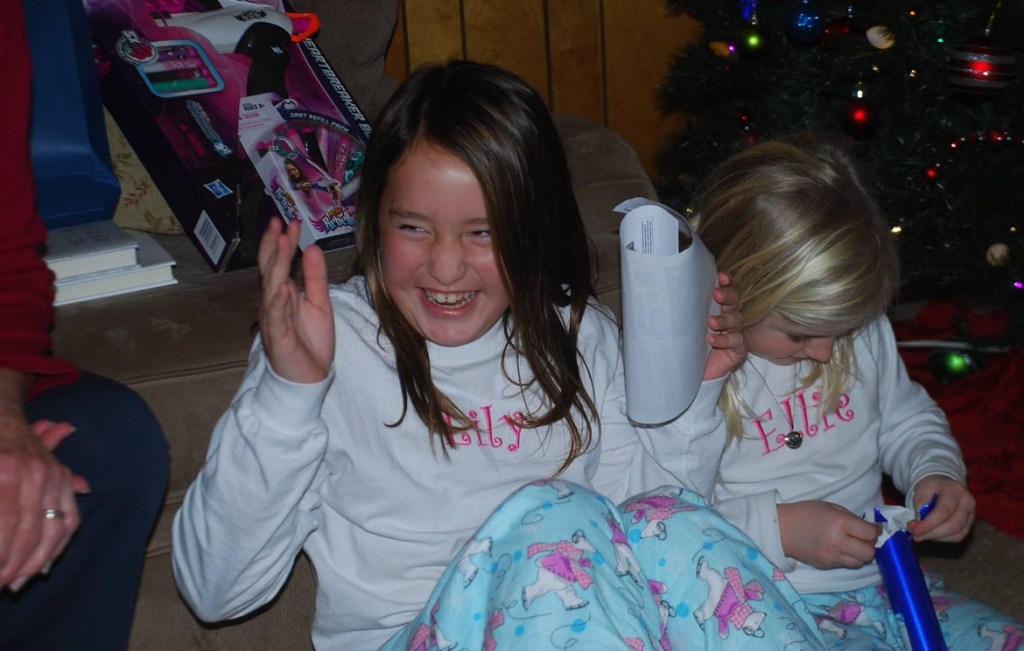



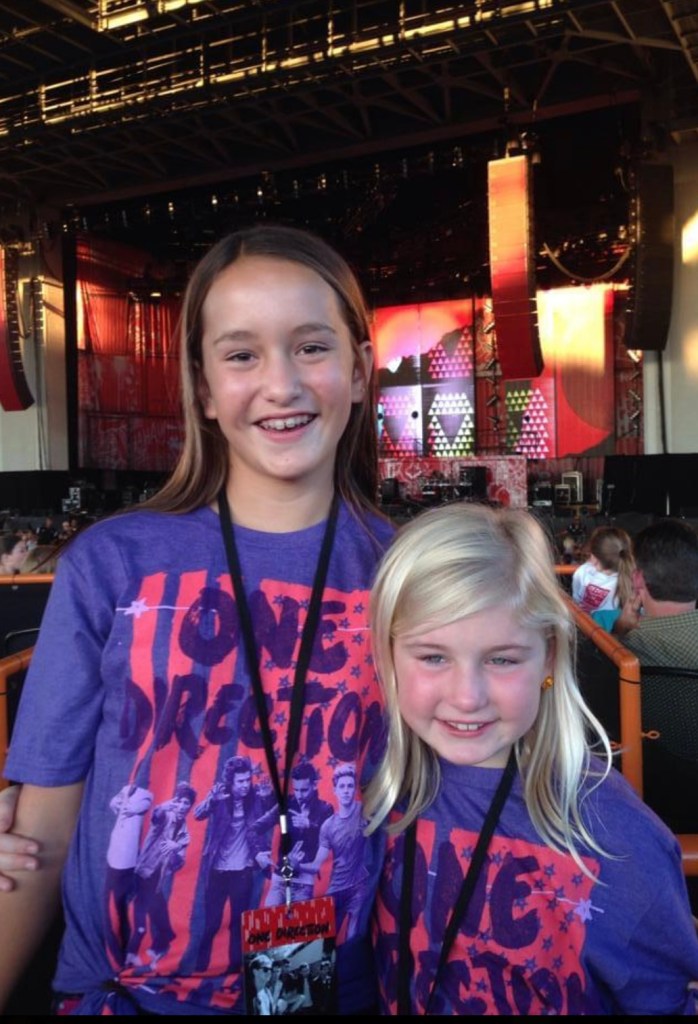
It is almost impossible to describe the pure joy on the faces of my cousin and I in these photos. We open these Christmas presents to discover they were tickets to a One Direction concert. We were screaming, ecstatic, and utterly overwhelmed with jubilation. (Sounds a lot like what people said about those “Beatle-maniacs” right?) And that is what is so uniquely special about this band. For myself, as well as an entire generation of young women- One Direction represents beautiful, uncomplicated, absolute joy.
A post script on Liam Payne
After I had finished this project, a tragedy occurred. Liam Payne, a member of One Direction, passed away on October 16, 2024; at the age of thirty one. The details surrounding his death are still unclear. The entire one Direction fanbase mourns this sudden and intense loss incredibly deeply.
Works Cited
Understanding Media and Culture: An Introduction to Mass Communication. University of Minnesota Libraries Publishing, 2016.
Taylor, Anthony James William. “Beatlemania—A study in adolescent enthusiasm.” British Journal of Social and Clinical Psychology 5.2 (1966): 81-88.
Coppa, Francesca, ed. The Fanfiction Reader: Folk tales for the digital age. University of Michigan Press, 2017.
MacDonald, Raymond AR, David J. Hargreaves, and Dorothy Miell, eds. Musical identities. OUP Oxford, 2002.
 Lily Tungol
Leave a comment