and the music that makes it so wonderful
Christmas time is here… perhaps even that short phrase makes you think of the opening song of the iconic A Charlie Brown Christmas TV special. Suddenly, you’re eight years old again… wearing fuzzy Christmas pajamas, sipping hot cocoa, and watching The Peanuts ice skate on the television with your family. That is the absolute nostalgic power that a Christmas song can wield. Christmas is a special time of the year for most people, myself definitely included. There are so many different aspects of the season that bring about warm and fuzzy feelings- the family traditions, the decorations, the movies, the food, and (I think) most importantly- the music. The first time you turn on the radio after Thanksgiving, you will undoubtedly hear “It’s the Most Wonderful Time of the Year” by Andy Williams. And while this may sound cheesy, as soon as I hear that, I do believe it. Music is at the center of anything Christmas, and while it is not the only important part of the season, it surely would not be the same without it.
December is often called the “holiday season.” This term has become more common in an attempt to include other December holidays like Hanukkah and Kwanzaa. While it is of course important to acknowledge the religious and cultural importance of these holidays, around the world and in the United States, this blog will be focusing on Christmas. I will be taking a specific look at the music that surrounds the holiday and its significance in the United States.
The majority of Americans celebrate Christmas. While the holiday is obviously rooted in the Christian religion, many people also celebrate the holiday with secular traditions. This combination of religion and modern cultural aspects makes Christmas the most significant holiday of the year.
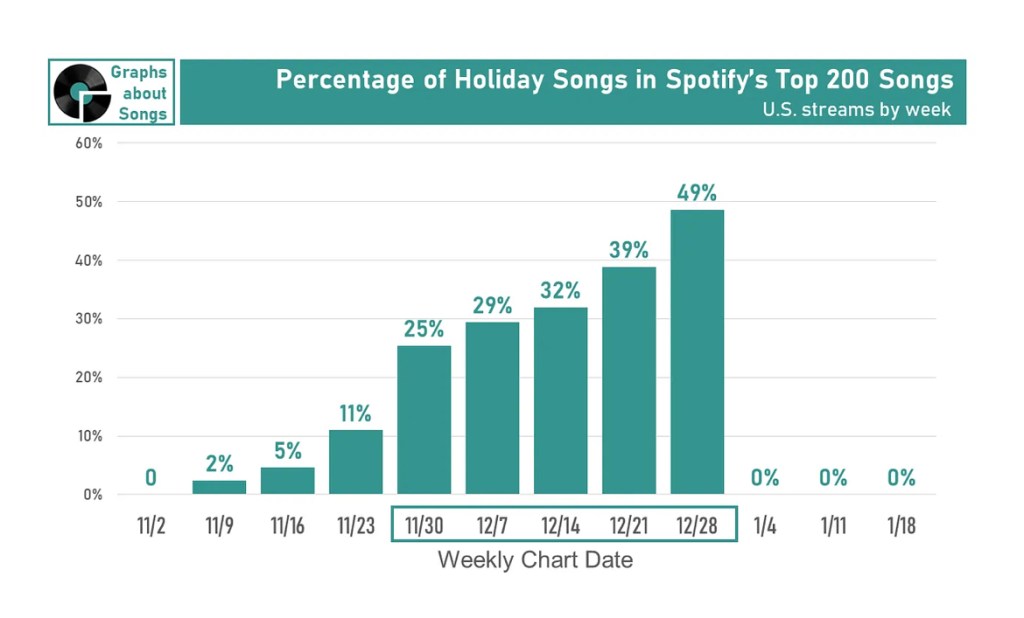
As shown in these Spotify statistics- when it gets close to Christmas, holiday music takes a lot of our music listening conscious. In the weeks leading up to Christmas, holiday music accounts for at least 25% of Spotify’s top 200 most streamed songs. This shows that Christmas music has a very strong hold on our general culture within the month of December. In short, its something that most people love and look forward to.
Perhaps this blog is more of an “everything but the music” project, perhaps it’s a project more about Christmas in general. However, I do believe that music is an essential part of almost every different aspect of the Christmas season. I will take a look at some of the history and evolution of Christmas music, then I will dive deeper into different experiences and activities that are essential to the holiday. In doing that, I’ll evaluate and explain just how important music is to all of these pieces.
A Little Bit of History
If we think about “Christmas music” as its own genre, it could be considered one of the oldest musical genres in history. Christmas music as a whole certainly doesn’t all sound the same, but it does tend to surround the same themes and ideas. Thinking about both religious and secular holiday songs- classical, choral, jazz, pop, and country genres all contribute to the cannon of “Christmas music.”
In terms of music we still listen to frequently, Christmas music has some of the earliest origins. It began as early as the initial spreading of Christianity as a religion, around the 4th century. In church services, the first Christmas hymns were sung and chanted in Latin. In the 12th century, St. Francis of Assisi popularized Christmas “carols” as part of nativity plays that depicted the birth of Christ. The songs started to be sung in vernacular languages like Italian, French and Spanish- rather than Latin. Christmas carols became more structured and were written down more often throughout the Renaissance period. Finally in the Victorian era (19th century) songs we still hear today like, “Hark! The Herald Angels Sing,” “O Holy Night,” and “Silent Night,” became staples of the season. Dale V Nobbman further explains this history in his book, The Christmas Music Companion Fact Book. He says, “Christmas is a time of religious contemplation, gift giving joy, the hope for peace on earth and carols and hymns that reflect all these activities and desires. Our traditional Christmas carols have developed over a period of many centuries from many forms and sources. Carols were at one time danced to as well as sung, most of them were originally sung in unison unaccompanied with the present harmonization added much later.” (14).
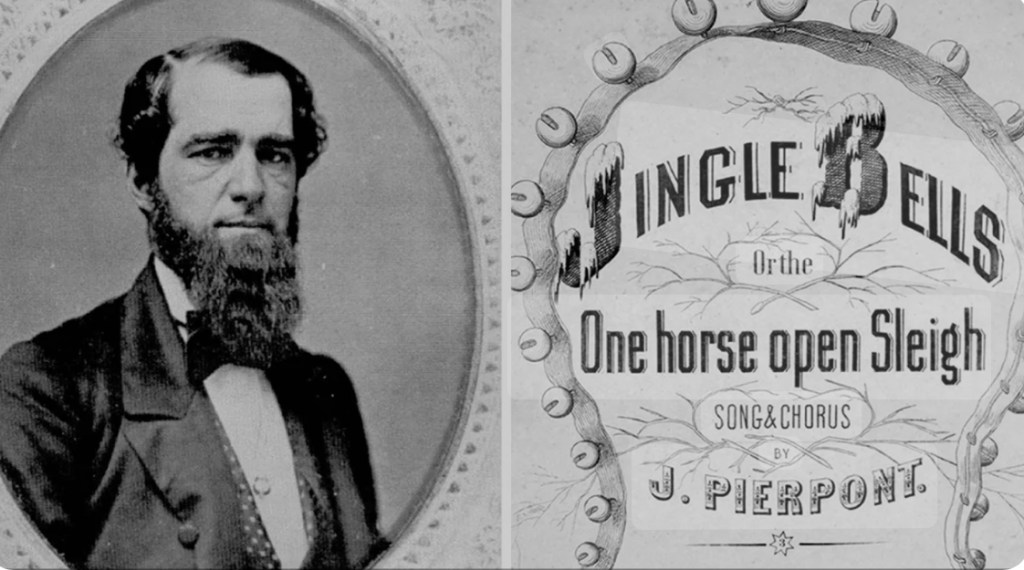
In the United States, Christmas carols were not popular at the time of the birth of the country, due to Puritan influence. However, in the mid- 19th century, Americans found a renewed interest in Christmas festivities- including its music and carols. In 1857, James Lord Pierpont wrote one of the most famous Christmas carols of all time, “Jingle Bells.” The song was actually originally titled, “The One Horse Open Sleigh,” and pioneered an American tradition of secular Christmas music.
A Categorical Divide
I think it is important to note the biggest divide when it comes to Christmas music- are the songs religious or secular? Christmas as a holiday is in itself religious, as it began as a celebration of the birth of Christ. However, in the United States in 2024, the prevalence of Christianity and religion in general is much lower than it has ever been. Only 63% of Americans identify as Christian, while the “nones” (atheist, agnostic, or simply non-religious) now make up over a quarter of the country’s population at 27%. However, 90% of Americans celebrate Christmas- solidifying its place as an unyielding cultural tradition.
- Religious
- Examples of popular religious Christmas songs would be “Silent Night”- talking about the “Holy infant” (Jesus), and “Joy to The World,”- declaring that “the Lord has come.” While these songs are hundreds of years old, you can still hear them on the radio or in the mall.
- Secular
- Classic Secular
- The classics began to become popular in the 1930s and 1940s and were often sung by jazz crooners like Frank Sinatra and Dean Martin. Think of songs like “Have Yourself a Merry Little Christmas,” “Winter Wonderland,” and “Santa Claus is Coming to Town.” These kinds of songs have a beautifully nostalgic tone and cover simple themes like spending time with family, snow, and of course our favorite mythical character- Santa.
- Modern Secular
- The more modern Christmas hits started to gain popularity in the 1980s and 1990s and have a huge pop (and sometimes rock) influence. The most notable ones in this category (or at least the ones I hear the most) are “Wonderful Christmastime” by Paul McCartney, “Last Christmas” by Wham!, and “All I Want for Christmas is You” by Mariah Carey. All of these are much more upbeat, catchy, and a little less sentimental.
- Classic Secular
In “Caroling Commercialism,” Wharton compares the two types saying,
“The two types of songs are often mixed and intermingled into what we associate with holiday music. It’s not as though during Christmastime the pop songs are played on pop stations and the religious songs on Christian-based stations. The songs are played together, and this technique helps remove some of the religious associations that may make the content unappealing to those who don’t celebrate Christmas. By combining them in this way, radio stations package the idea of “Christmas” as secular. Everyone can enjoy Christmas because it’s really not about the birth of Jesus—it’s about Commercialism” (2).
While I find his take on the divide between the two to be a little cynical, it does make sense. In many ways Christmas has become (at least slightly) about commercialism- the endless marketing, advertisements, and massive emphasis on gift shopping. But I believe by combining the two kinds of Christmas music, we create a cultural cannon that is representative of many different people’s relationship to the holiday.
Events and Experiences
Now, onto the parts that are a little more fun. Since I was young, I have always associated the Christmas season with a lot of things to do. Places to go, people to see, and festivities that delight and entertain us, year after year. Christmas is one of the biggest times of the year to celebrate traditions, and so this means a lot of “events” repeated from year to year. These are definitely different from family to family and culture to culture, so I can only speak about the ones I am accustomed to and the vital part that music plays in all of them.
Santa’s Wonderland- An Immersive Christmas Celebration
One of the most apt things to talk about for this topic as a Texas A&M student would be Santa’s Wonderland- a staple of a College Station Christmas. There is no better way to describe this place than their tagline- “A Very Texas Christmas.” The attraction is a large Christmas themed outdoor holiday extravaganza of sorts. It includes Christmas lights everywhere, a hill of artificial snow for sledding, meet and greets with Santa, hot cocoa and cider, holiday themed beer and wine, Christmas sweets, a petting zoo, an ice skating rink, a huge bonfire, a stage with a live band, and my personal favorite- the hayride through the expansive light trail. At this place, there are Christmas songs playing anywhere you step throughout the park. It also fits its musical niche to the Texas theme, the Christmas carols playing are usually a mix of classical religious hymns, modern classic carols, and popular Christmas music with a country flair. It is quite the large and busy attraction, so they even have the music playing through speakers as you walk from the parking lot to the front gates of the attraction. I specifically remember hearing a version of “Silent Night” by Vince Gil playing this year, leading my mom into a lengthy deep dive on her love for the singer.
Lovely Weather For a Hay Ride Together
The two most notable roles that music plays in this experience are in the hayride and at the main stage. The hayride is one of the most popular attractions at the park. Patrons are seated on bales of hay in a large tractor trailer on a ride through the beautiful trail of Christmas lights. The music for this experience is usually of the more classic variety, with songs like “Have Yourself a Merry Little Christmas,” and “The Most Wonderful Time of the Year.” (as shown in the video) There are even some sections where the lights are synchronized to the music. The music adds to the ambiance and especially sweet and cozy feeling of this experience. I think the music is truly what makes the hayride special, without it we’d just be freezing in the back of a tractor looking at some LED bulbs.

A Fireside Sing-A-Long
The other most delightful musical part of Santa’s Wonderland is their main performance stage. Guests can sit around the large bonfire and listen to the Santa’s Wonderland band play. This is the part of the park where the music gets the most “Texas” influence on it. It is a six piece band that includes fiddle, harmonica, and sometimes banjo. They play traditional Christmas songs like, “Santa Claus is Coming to Town” and “Jingle Bells,” but all with a bit of twang and country flair. The combination of traditional Christmas culture and Texas culture is exemplified most here, through the melding of the two musical genres. The music provides the perfect ambiance for enjoying the company of your friends and family, while cozying up by the fire.
In this video, we watch the band perform the Gospel Christmas classic, “Go Tell it on the Mountain.” This is another example of the blending of the religious and the secular within the realm of Christmas culture. The special Texas flair on the song makes it even more memorable. Also, you can see all the small children dancing- showing how energetic and engaging of a performance it really is.
Christmas Choirs, Concerts and Musical Spectaculars
Christmas is also a busy time for all seasonal kinds of plays, musicals, and shows. All of these, of course, also thoroughly rely on music. Especially in K-12 schools, Christmas performances are a big deal. Elementary choirs warm parents’ hearts with performances of songs like “Jingle Bells,” and “Here Comes Santa Claus.” In many churches, nativity plays are prevalent showcasing the birth of Jesus- set to songs like “Silent Night,” and “Away in a Manger.”
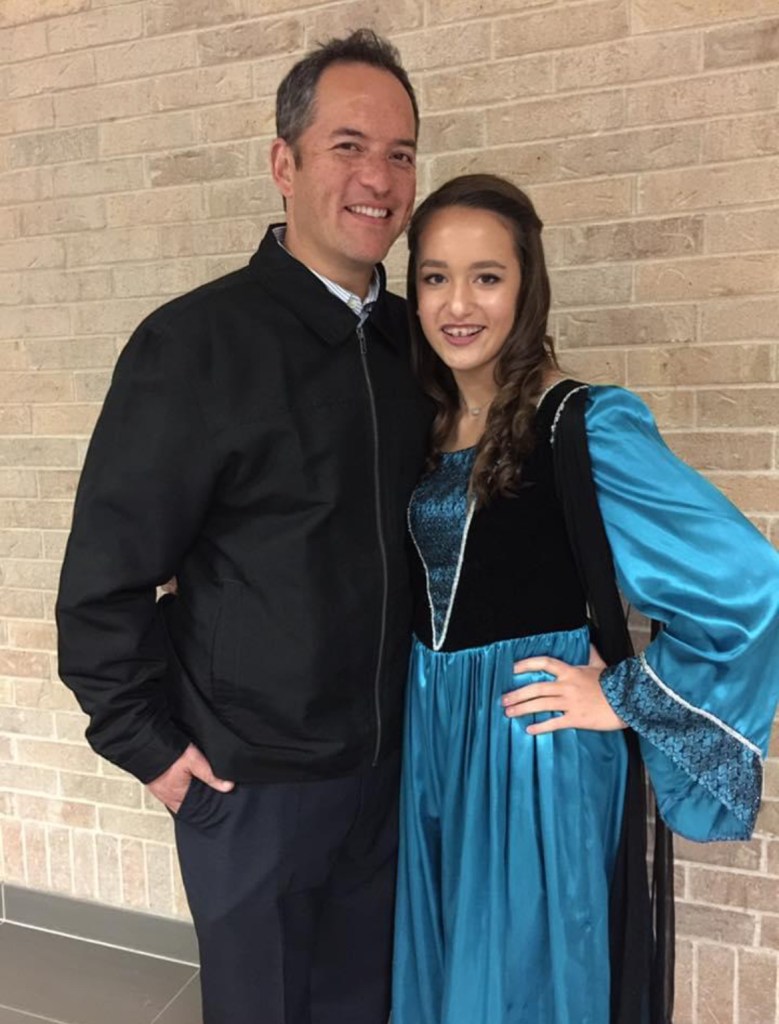
In my personal experience, my high school choir hosted a Christmas madrigal dinner, one of our favorite performances all year. Holiday madrigal dinners are more of a modern invention, but they take customs from renaissance era European royal courts. Ours included full on renaissance era costumes, a period appropriate “royal feast,” performers dressed as kings, queens, and court jesters, and of course- Christmas hymns, sung in a traditional choral style. In the picture you can see myself dressed in my costume for the performance, with my dad who came to watch and celebrate with us. We sang period appropriate songs in choral arrangements like, “Deck the Hall,” and “Good King Wenceslas.” This is just another great Christmas memory I have centered around music. The “of another time” of it all shows how many different Christmas music eras and niches there are, so everyone can find their personal favorite to enjoy.
Classical Christmas Compositions (and an iconic ballet)
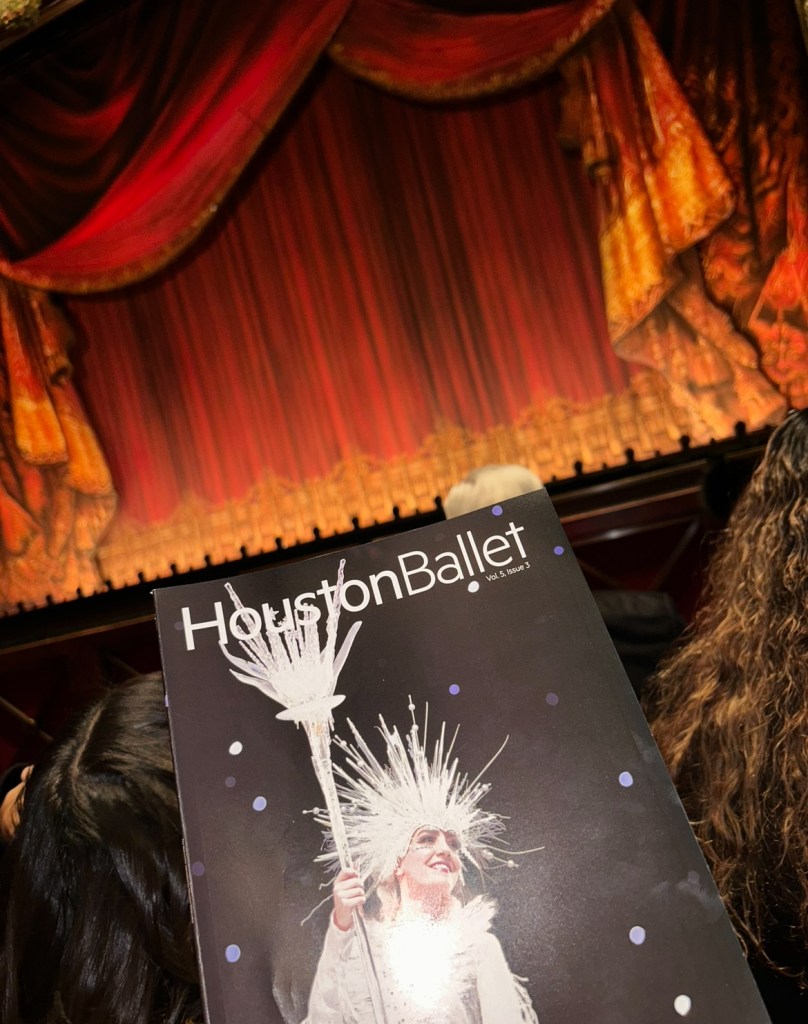
Another holiday tradition that music plays a huge role in is The Nutcracker. It is one of the most famous ballets in the world, and a long standing tradition (over 100 years) that almost all professional ballet companies perform every year around Christmas. It tells the story of Clara, a young girl who is gifted a nutcracker for Christmas and her journey into the land where the Nutcracker comes to life. The music, composed by Tchaikovsky, is incredibly recognizable even if people don’t realize it. “March,” Waltz of the Snowflakes,” “Dance of the Sugar Plum Fairy,” and “Russian Dance,” are used in many Christmas movies and holiday light displays. While Tchaikovsky’s orchestrations are not Christmas music you might hear on the radio, they are a huge part of the Christmas music canon as a whole. The compositions are among some of the most famous and celebrated in the realm of classical music as well. The Nutcracker exemplifies that music does not even have to have words to evoke the holiday spirit. Here is a photo of my program at the Houston Ballet’s rendition of The Nutcracker, another holiday tradition that my mom and I enjoy every year.
It’s a Tradition!
“Here We Come A-Caroling”
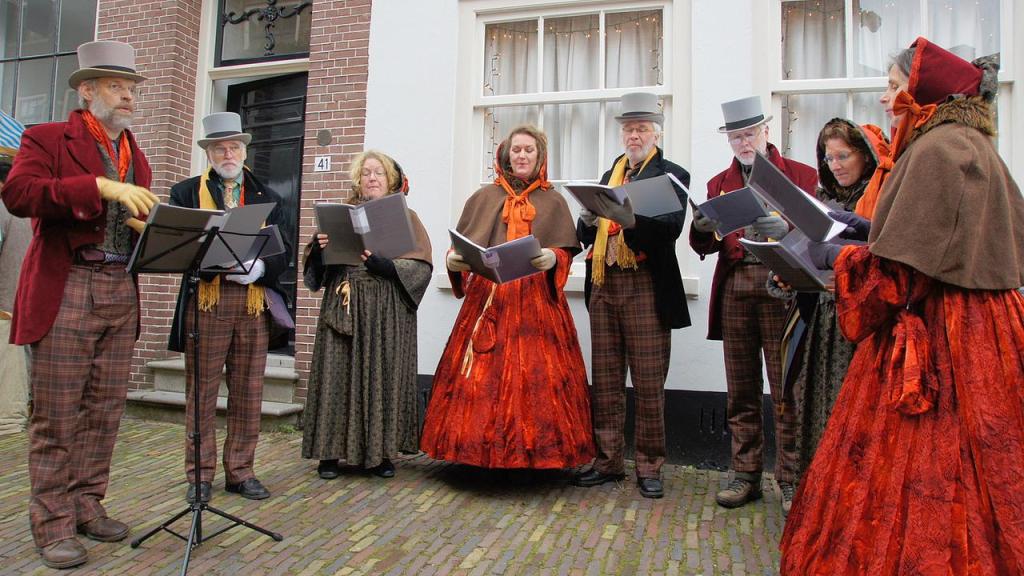
Christmas caroling is another significant Christmas tradition that is solely dependent on music. While less common nowadays, it has very significant historical roots in Victorian England, then spreading to the United States. Groups of carolers would go door to door singing popular carols like “God Rest Ye Merry Gentlemen” and “We Wish You a Merry Christmas” in efforts to spread the holiday cheer and raise money for charities. In return they would often be given hot drinks like wassail or some of that iconic figgy pudding from the aforementioned song. While this style of caroling has mostly gone by the wayside, it is a tradition that isn’t completely gone. In “The History of Singing Christmas Carols,” it is explained that, “Today, carol singers will more likely be found in town squares, shopping centres and visiting hospitals and residential care homes – and rather than waiting to be rewarded with a cup of wassail, modern carolers are more likely to ask for donations to charity.” (2). Sometimes, modern day carolers (like in the photo) dress up in Victorian era costumes as a nod to the history and tradition of caroling. While some find Christmas to have become commercialized, it is traditions like caroling that remind us of the more genuine and pure notions surrounding the season, like giving to charity and spreading “goodwill towards men.” And with caroling, it is music and singing that allows people to spread that joy and love to each other.
Our Favorite Christmas Movies and The Music That Makes them
Another holiday tradition that many hold dear is rewatching their favorite Christmas movies over and over again, year after year. All most all of these films have vital scenes that include music. These scenes tend to stick out in people’s minds when thinking about Christmas movies due to the songs themselves. “Christmas Time is Here,” of course evokes the A Charlie Brown Christmas. “Carol of the Bells,” might remind you of Kevin setting his elaborate trap for the burglars in Home Alone. And of course, the song “Christmas Vacation,” will always remind us of the hilarious National Lampoon classic of the same name.
One of my personal favorite Christmas films is Elf. It stars Will Ferrell as Buddy the Elf, a human raised as a North Pole elf. He comes to New York City in search of his biological father, and is disappointed in the lack of Christmas cheer he finds in the city. The following video is one of the final and most crucial scenes in the film- where music plays a huge role.
One phrase that Buddy espouses throughout the entire film is that “the best way to spread Christmas cheer is by singing loud for all to hear.” And perhaps that is the thesis of this entire project, that music (especially Christmas music) is one of the best ways to spread joy to others, especially around the holidays. In this scene in the movie, all the people that Buddy has come into contact with throughout the film have diminished their negative attitudes surrounding Christmas, and begin to sing the iconic “Santa Claus is Coming to Town.” This display of “Christmas cheer” renews Santa’s magic and allows his sleigh to be able to fly again. While of course this is a work of magical fiction, it is a good metaphor for the power of Christmas music. The more people that enjoy it and share it with others, the greater the sense of our communal wonder and awe surrounding the Christmas season becomes.
The “Christmas Spirit”
I personally think that Christmas music has a special property that no other genre has… a sense of warmth, nostalgia, and all around joy. While there are so many other musical genres out there that bring people together and provide a sense of community, Christmas music seems to do just that in an unique way. I think most people would find it very hard to be grumpy or upset while listening to it. Unless you’re the Grinch or Ebenezer Scrooge, I suppose. There are certainly some people that find the constant playing of it to get annoying. However, I think for most it reminds them of the exuberance and whimsy of being a kid. The innocent times when we still believed in things like Santa Claus and reindeer.
Christmas can also be a very hard time for those who have lost loved ones or cannot be with them. I still remember commercials of people in the military who couldn’t come home set to “I’ll Be Home For Christmas.” Okay, well there is one sad Christmas song. In 2008, a study was conducted in which a staff Christmas choir sang to patients in a cancer hospital. Then, researchers measured how this affected the patients through surveys. In their conclusion it was stated, “Many said the music aroused positive emotions and memories. Several described transformative thoughts and physical reactions, felt affirmed by the Christmas spirit or message, and/or appreciated the peaceful or enlivened and social atmosphere.” (O’Callaghan, 686). This just further shows the healing power that Christmas music can have, especially for those going through hard times. The seasonal joy the music brings is like no other genre.
Some Personal Perspective (plus my friends!)
I think my first person video sums up the idea of this project as a whole: Christmas music means something different to everyone. While I went with one of the more classic songs, my friends mostly picked contemporary ones. This just shows the breadth of options there are when choosing what holiday music you want to listen to. However, one theme that was common throughout all the videos was a passion and sentimentality we all hold surrounding these songs. Christmas is a time full of love, joy, and cheer and the music we associate it with reflects that.
 Lily Tungol
Leave a comment